Goulds is a name that seeps into conversations about well water with the same inevitability as the pump itself. When you own a well, you quickly learn that the pump is less a gadget and more a lifeline. It sits in a quiet corner of the basement or down in a well house, turning energy into clean water with a simplicity that belies the forces it handles every day. Over the years I have wired, installed, replaced, and spec’d Goulds deep well pumps for farms, single families, and small commercial setups. This article is the accumulation of those experiences, not glossy marketing. It’s about reading a pump’s life in real time, understanding where longevity comes from, and how Goulds pumps fit into that story.
Goulds deep well pumps occupy a particular niche in the market. They are not the cheapest option, but they are widely available, backed by a long history of service in a wide range of conditions. The conversations I have with customers often circle back to two questions: How long will this pump last in our groundwater, and what can we do to ensure it lasts as long as possible? Those questions are worth unpacking because longevity is not merely about the pump’s components. It’s also about the system around the pump, the water we pull from, and the habits we build around maintenance. The goal here is to offer a grounded perspective on selecting Goulds deep well pumps with longevity in mind, plus practical steps to maximize their service life.
A quick orientation on the landscape helps. Deep well pumps are typically submersible units placed down in the well. They push water upward through a column, battling head pressure and the ever-present risk of sand, mineral buildup, and wear on bearings and seals. Goulds, a brand part of the Grundfos family in recent corporate history, has long made both end-user-friendly models and rugged industrial variants. The longevity of any unit is a function of design, material quality, installation, and ongoing care. The fourth factor—how the system is used—often plays a larger role than the pump’s raw resilience. A pump that runs at steady, moderate speeds with consistent water draw tends to outlive a unit that is frequently starved for water, exposed to heavy cycling, or pushed to extremes.
What makes Goulds pumps a sensible choice for longevity? First, their focus on reliability. If you have ever pulled a Goulds pump from a well and found components that show up in industrial as well as residential settings, you know the brand’s commitment to durability. Second, the availability of parts. A common challenge with any deep well pump is finding the right replacement motor, seal, or impeller years down the line. Goulds’ parts network, plus a long tail of compatible models, makes servicing feasible rather than forcing a full rewrite of the system. Third, the design philosophy that often emphasizes simple, proven technologies over wizardry. You can service and diagnose a Goulds pump with tools and know-how that a typical well owner can assemble, provided you have the right manuals and a careful approach.
But let us ground this in the realities you will encounter. A pump’s age and performance do not exist in a vacuum. A 20-year-old model can be in superb shape if it has enjoyed clean water, stable electrical supply, and humane duty cycles. Conversely, a 5-year-old pump can be on a short retirement if it has faced gritty water, high-cycle demand, or a poor installation that induces vibration, air leaks, or improper priming. The art here is calibration, protective choices, and vigilant maintenance rather than chasing some mythical long life built into the unit by default.
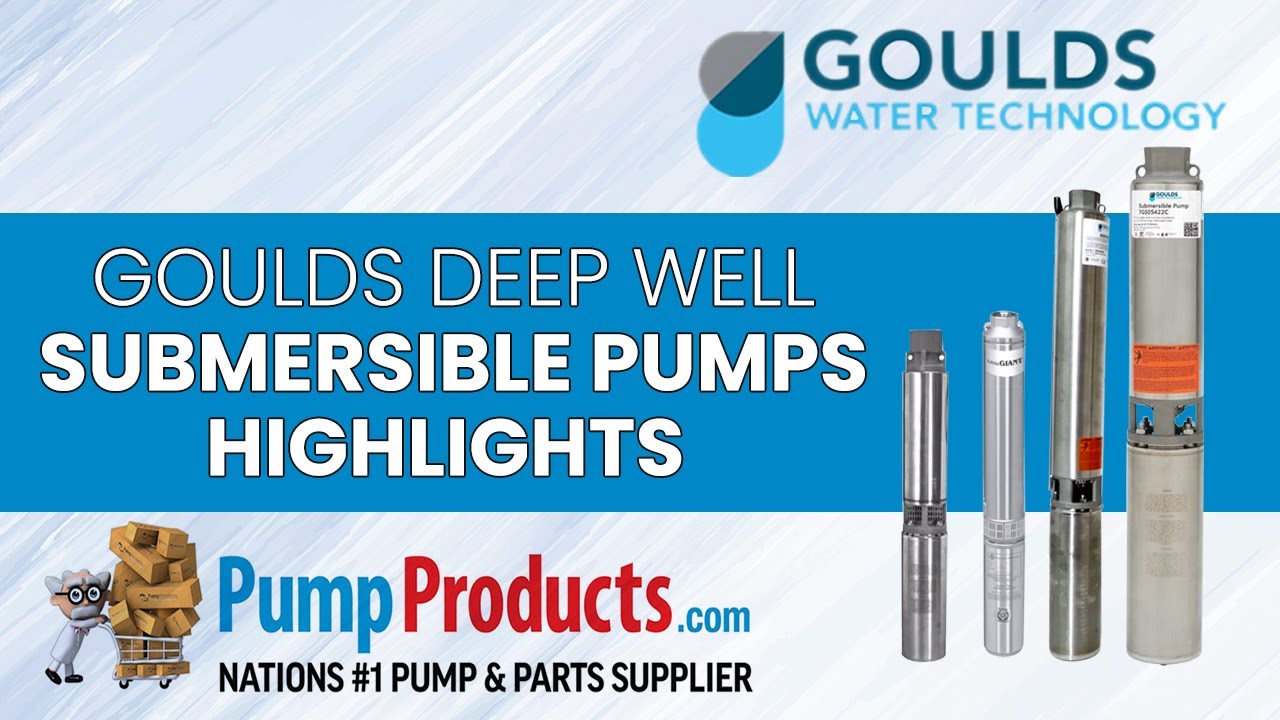
Choosing the right Goulds model to maximize longevity begins with a few practical considerations. The first is head and flow requirements. Deep wells present a pressure and head load that shifts with the height of the water table, the diameter of the well, and the elevation of the storage tank. Getting the pump matched to the job is not a luxury; it is a necessity. A pump that runs at a strain to deliver the same flow will heat up, wear bearings more quickly, and shorten overall service life. The second factor is water quality. The presence of sand, silt, iron, or dissolved minerals corrodes seals, clogs impellers, and accelerates downstream wear. A good screening and filtration strategy at the well interface—plus a careful check of the pump’s intake screen—will pay dividends in longevity. The third factor is the electrical supply. A pump that encounters voltage swings or improper wiring is functionally aging itself twice as fast, because the motor experiences best value deep well pumps stress that shortens insulation life and harms bearings. The fourth factor is routine maintenance. Pumps are designed to be serviced; neglect is the most expensive form of wear and tear because it hides small issues until they become major faults.
The art of evaluation, then, is a blend of spec sheet reading and field testing. When you look at Goulds models, you will encounter a family line that includes different materials, different shaft and bearing assemblies, and different impeller configurations aimed at various well depths and depths of discharge. The deeper the well, the more robust the motor and seal system tend to be. If you are operating in a water table that dips and rises through seasons, you may prefer a pump with a higher service factor and a torque-limiting feature that protects the motor during short heavy draws. If you are in a location with sandy aquifers, you will want a robust intake screen and a design that resists debris ingress into the impeller chamber. If you travel with a scenario where water hardness is extreme, you might consider a model with components that resist mineral buildup, though no pump is entirely immune to scale in hard water unless you add external conditioning.
The practical path to maximize longevity hinges on robust installation paired with a disciplined maintenance routine. In my experience, a well-planned installation reduces the probability of premature wear more than any single upgrade to the pump itself. A clean well environment, properly sized check valves, and a correct flow rate are as important as the pump’s internal components. In addition, the way you monitor performance matters. A pump that suddenly drops its flow rate, or becomes noisier, or shows signs of overheating, indicates a problem that, if addressed quickly, can save the unit from a catastrophic failure. In the real world, I have seen cases where a small adjustment to the discharge line or a routine replacement of a pressure switch extended a pump’s life by several years. The reverse is true as well: a neglected seal leak can allow water to short the motor windings or corrode the casing, leading to more expensive failures later on.
In this field, there are a few non-negotiables that I insist on for longevity. First, always size the pump for your actual head and flow needs, not for a comfortable margin that ends up in constant overwork. The better the match between the pump’s capability and the system’s demand, the less heat and wear the motor experiences. Second, make sure the electrical system is solid. Use a properly grounded circuit, correct gauge wire, and a reliable control box. A cheap or mismatched control setup is a persistent risk to pump health. Third, protect the system from sand and silt with a correctly placed suction screen, proper gaskets, and, if necessary, a downhole filtration scheme. Fourth, commit to regular checks of the pump's seal and bearing wear, and replace components before they become the reason for a failure. Fifth, maintain clear documentation of service calls, replacements, and the pump’s runtime. When you have a historical ledger you can review, predicting and planning for maintenance becomes practical rather than speculative.
There is a recurring theme in the field that bears saying plainly: longevity is built through a sequence of small, deliberate decisions rather than a single heroic intervention. You will not rely on a single large replacement as a buffer against wear. Instead, you replace seals before they drip, you test the motor insulation before it weakens, you clean the intake and verify alignment, and you document all of it. Every time I walk into a job site and see a Goulds pump installed with a well-thought-out maintenance plan, I notice the difference in how the system behaves after a year, two years, or five. The pump is not always the most expensive part, but it is the part that quietly keeps pace with your life, day after day.
To help ground these ideas, here is a run-through of common scenarios and how to approach them with longevity in mind. The first scenario is a residential well with moderate depth, steady groundwater, and seasonal irrigation in the yard. The second is a small farm with a shallow to moderate well that serves both household needs and livestock water in hot months. The third is a remote property where downtime is costly, and the well has a higher solids content and more aggressive aquifer. Each situation invites a slightly different emphasis, but the underlying principles stay consistent: match the pump to head and flow, protect the system from abrasive elements, maintain a clean electrical environment, and keep a routine that makes small problems visible before they become big ones.
In a residential context with Goulds deep well pumps, you will typically be working with a few standard options that balance longevity, efficiency, and ease of service. A conservative approach is to select a motor with a service factor that aligns with the well’s head while choosing an impeller and casing material that resists corrosion and wear in your water chemistry. If you are in an area with a high iron content, consider a model whose seals and bearings are rated for iron-bearing water and who has proven performance with iron-fouling scenarios. You may find yourself leaning toward a deeper well pump if your static water level is variable and the foot valve or check valve is a point of failure risk. In such cases, a pump design with robust downhole components and a dependable, snag-free cable route reduces installation and later maintenance costs.
The question of “best deep well pumps” is less about picking a single standout model and more about choosing the right tool for the job. In the Goulds lineup, you will encounter families of pumps designed to handle different depths, flows, and water chemistries. The right choice will depend on careful assessment of the well’s static and drawdown levels, the desired gallons per minute, the required operating pressure at the storage tank, and the quality of the water. It is tempting to overspec for future needs, but oversizing can introduce inefficiencies and increased wear in operation. A well-chosen pump will operate at a steady rate and avoid the start/stop cycles that shorten motor life.
A practical point about where to buy Goulds deep well pumps is not simply price and availability, though those are real considerations. It is about ensuring you can access knowledge when you need it. A knowledgeable local dealer or a trusted online retailer with a solid service ethos can be a lifesaver when your system is down. The pump is one part of a broader ecosystem that includes the pressure tank, the check valve, the control box, and the electrical supply. When you buy Goulds, you are buying into a network of support that can help you troubleshoot a problem, source the right replacement parts, and plan for a service schedule that extends the life of the setup.
Maintenance cycles can be simple yet effective. A well-run schedule prioritizes key touchpoints that predict life expectancy more reliably than a calendar-based approach. These touchpoints are grounded in practical, observable signals rather than speculative promises. If you observe a measurable drop in flow rate, a decline in pressure at the taps, unusual vibration, leakage around seals, or a motor that runs significantly hotter than usual, you are looking at a signal that something is approaching the end of its useful life. A prompt, methodical response—checking wiring, testing the capacitor, inspecting seals, and verifying the intake—is often enough to prevent a small issue from turning into an expensive failure.
Two lists can help organize essential considerations and practical steps without turning the article into a checklist brochure. The first list focuses on quick, meaningful maintenance items you can perform or verify with basic tools. The second list offers a concise comparison approach for evaluating Goulds models in practical terms.
- Maintenance checklist (five items) Inspect the suction screen and seating for debris or sediment; clean or replace as needed. Check the electrical components—capacitors, wiring, and the control box—for signs of wear or corrosion; tighten connections as required. Test the pressure switch and cut-in, cut-out settings to ensure stable cycling and proper protection. Inspect seals and bearings for leakage or unusual play; replace seals proactively before a leak develops. Monitor water quality and well yield; note any changes in flow that might indicate sediment influx or valve issues. Model evaluation quick guide (five items) Confirm the well depth and drawdown to choose a motor size and head capability that won’t overwork the pump. Review water quality, particularly hardness and iron content, and select seals and materials that resist the most likely wear patterns. Assess available space in the well house for service access and cable routing to minimize vibration and wear. Compare service factor ratings and efficiency curves to balance long-term cost with initial outlay. Check local availability of parts and service expertise to ensure timely maintenance and repairs.
These lists are not exhaustive, but they distill the most impactful steps and considerations I rely on in the field. Longevity is not merely about the pump’s inner life; it depends on the system’s overall health and how attentively we tend to it over time.
In the broader industry, there is a common tension between the desire for a simple, high-performing unit and the reality that wells vary dramatically. The Goulds brand has contributed meaningfully to reducing that tension by offering a range of models that can be matched to specific conditions. My approach when evaluating a new installation is to bring a simple, unvarnished set of questions to the table: What is the exact head the pump must overcome at this site? What is the expected daily water demand, including the peak load of irrigation or livestock needs? What is the likely sand or mineral load that could affect the pump over time? What are the service and replacement parts lead times in this region? With those answers, you can begin to map a pathway to a setup that not only delivers the required performance but also minimizes the chances of an untimely farewell to the pump.
There is another consideration that often surfaces in real life but is easy to miss in the brochure. The downhole environment is a harsh place for any mechanical device. Temperature fluctuations, groundwater chemistry, and the physical wear from pumping pull the system into a cycle of use and stress that is very different from surface equipment. The best way I have found to hedge against premature wear is to ensure that every joint, gasket, and seal is properly matched to the specific dimensions and pressure conditions of the installation. When you see a Goulds pump installed with proper downhole clearances, a well-chosen check valve, and a robust discharge line, you see the sum of careful engineering and meticulous field execution. This is the kind of setup that does not rely on luck but on tested practices that have stood up to years of use.
A note on modern expectations and historical context helps frame why longevity remains central to the decision process. In many homes and rural properties, the well is a singular asset. A pump failure is not just an inconvenience; it can interrupt critical daily routines, from morning coffee to livestock watering. The issue is not merely replacing a component; it is restoring a system that has accrued a rhythm and reliability over time. Goulds pumps, when properly selected and maintained, offer a predictable cycle of service. The aim is not to chase the longest possible life on the label but to optimize for the relationship between ongoing maintenance, the water supply’s stability, and the owner’s tolerance for downtime.
To close this exploration, I return to the central idea: longevity is grounded in thoughtful choices and disciplined care. A Goulds deep well pump is not a magic wand that defies the law of wear. It is, in practice, a durable instrument whose lifespan can be extended through careful matching to site conditions, robust installation practices, and a steady maintenance regimen that treats subtle signs as opportunities rather than excuses to defer action. When a customer asks me whether Goulds is the right brand for longevity, I answer with a story from the field. A well in a quiet neighborhood, with a Goulds pump that has logged twenty years, still delivering clean water with modest maintenance, is a quiet testament to the marriage of good design and good stewardship. That is the story I want every well owner to experience.
The final practical takeaway is this: invest in a good initial assessment, prioritize a well-considered configuration, and commit to a maintenance cadence that respects the pump as a living part of the water system. In the end, longevity is less about a single heroic fix and more about the quiet, faithful performance of a well-chosen Goulds deep well pump that has earned its keep through years of steady service. If you plan accordingly, you may find that your Goulds pump becomes less a chapter in your home’s story and more a steady line that runs through it, quietly, reliably, and with a kind of stubborn endurance that is impossible to ignore.